
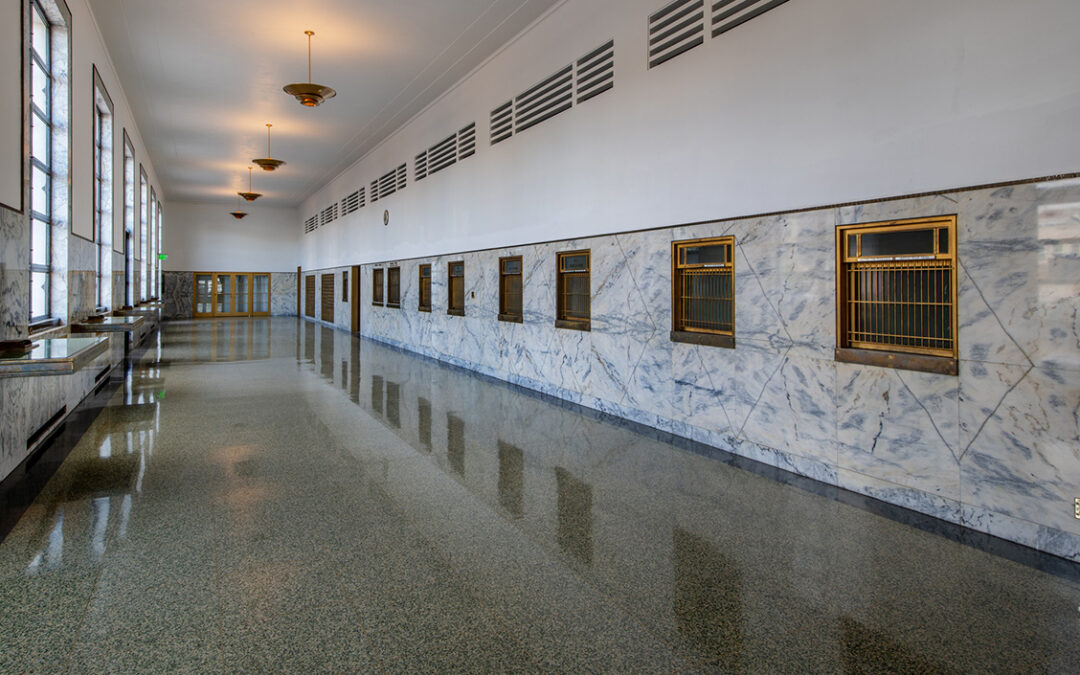
The floor is the most heavily used surface in any commercial facility. It absorbs foot traffic, rolling equipment, chemical spills, moisture, and two decades of maintenance decisions — and it communicates something about the organization every time someone walks through the door.
Most facilities replace flooring when it fails. The ones that manage it well choose systems that match their operational environment from the start, and never face that conversation.
This guide covers what the data says about flooring risk, how to match a system to your facility type, and what CFS installs across each vertical.
The financial case for selecting the right flooring
Flooring is not a neutral budget line. The liability exposure from the wrong surface is measurable and significant.
According to Liberty Mutual's 2024 Workplace Safety Index, falls on the same level cost U.S. employers $9.99 billion annually in medical expenses and lost wage claims. Slips or trips without a fall add another $2.34 billion. The average per-incident cost to an employer is approximately $40,000. When a claim reaches litigation, a single slip-and-fall can cost between $20,000 and $100,000.
Those numbers are largely preventable. Most slip, trip, and fall accidents — which occur more than 244,000 times per year across U.S. workplaces — can be prevented with the right flooring and safety practices.
On the maintenance side, the lifecycle math is equally compelling. The total cost of ownership for polished concrete is 82% lower than VCT over a 10-year period. Epoxy topcoats require reapplication every five to ten years in commercial settings, and a full system recoat every ten to twenty years — on a 10,000-square-foot warehouse floor, that recoating cycle adds $50,000 to $120,000 in cost over 20 years that polished concrete does not carry.
The selection decision made at installation determines whether those costs are avoided or eventually paid.
What flooring systems we install and where it performs best
CFS is a Dur-A-Flex certified installation partner serving aviation, healthcare, education, commercial, and industrial clients across Georgia, Alabama, and Tennessee. The following is a practical breakdown of each system and the environments where it performs best.
Polished Concrete
Aviation · Education · Retail · Commercial · Healthcare Corridors · Institutional
Polished concrete refines the existing concrete slab through mechanical grinding — no coating is applied, which means there is no coating to fail, peel, or require reapplication. With proper maintenance, polished concrete floors last 20 or more years, frequently outlasting a facility's interior renovation cycle.
The surface is non-slip, light-reflective, moisture-resistant, and requires only periodic damp mopping to maintain. For facilities pursuing LEED certification, polished concrete uses the existing slab and avoids additional coatings and chemical emissions — a strong choice for occupied spaces where air quality matters.
CFS has installed and maintained flooring systems at Hartsfield-Jackson Atlanta International Airport — among the highest foot-traffic environments in the world. That experience translates directly to education campuses, healthcare corridors, transit facilities, and commercial properties where traffic volume and operational continuity place the same demands on a floor surface.
CFS installs polished concrete on new slabs and as retrofit work on existing floors. Stained, scored, and patterned options are available for facilities with design requirements alongside performance specifications.
Epoxy / Resinous Systems
Warehousing · Manufacturing · Food Production · Laboratories · Loading Docks · Industrial
Epoxy is specified where chemical resistance, containment, and heavy-load performance are the primary requirements. Epoxy is preferred for high-traffic warehouse operations; in manufacturing, epoxy and polyurethane resin systems address abrasion and corrosion; in laboratories, chemical-resistant epoxy provides containment.
Over a 15-year facility horizon, commercial epoxy delivers a lower total cost of ownership than paint or VCT in environments where chemical resistance, slip texture, and designed safety markings are required. A high-build epoxy installation on a 10,000-square-foot warehouse floor runs approximately $0.40 per square foot annually over that period — compared to $0.70 to $1.00 per square foot for repainting the same slab every two to three years.
Surface preparation is the factor most commonly underestimated in epoxy projects. Preparation accounts for 30 to 50 percent of total project cost — contractors who minimize prep costs are cutting corners that compromise the finished product. CFS's Dur-A-Flex certification covers both material specification and installation process, including surface profiling, moisture testing, and substrate evaluation before any system is applied.
Urethane Coatings
Commercial Kitchens · Food and Beverage Processing · Pharmaceutical · Heavy Industrial
Urethane is specified for environments that combine thermal shock, aggressive chemical exposure, and continuous heavy traffic — conditions that push standard epoxy to its limits. Steam cleaning, temperature cycling, and industrial cleaning chemicals all degrade standard coatings over time. Urethane systems resist that degradation.
Commercial kitchens, food processing plants, and pharmaceutical manufacturing facilities are the most common applications. CFS installs urethane coatings as part of the same Dur-A-Flex certified portfolio.
Polished Marble
Hospitality · Corporate Headquarters · Institutional Lobbies · High-End Commercial
Natural stone in commercial environments wears and dulls without proper maintenance programs. Restoration is consistently more cost-effective than replacement. CFS provides polished marble restoration and ongoing maintenance for clients managing high-value stone surfaces in lobbies, corridors, and public-facing spaces.
Carpet, Wood, and Tile
Offices · Classrooms · Healthcare Patient Rooms · Mixed-Use
For facilities with acoustic, comfort, or aesthetic requirements that high-performance systems do not address, CFS installs carpet, hardwood, and tile. These projects are managed with the same preparation standards and installation oversight as CFS's industrial systems work.
Six questions to ask before you specify
Facility managers evaluating flooring replacement or renovation should work through these before engaging any contractor:
- What is the actual traffic load (foot, rolling, or forklift) and does the current surface show wear consistent with it?
- Are there chemical, moisture, or thermal conditions the current system was not engineered to handle?
- What is the annual maintenance cost per square foot, including labor, products, and repair or recoating work?
- Does the facility have sustainability or LEED targets a flooring choice could support?
- What is the planned holding period, and does the system's service life match that horizon?
- Who is evaluating substrate condition: moisture, slab integrity, and surface profile before the new system goes down?
Many floors look alike but are made and cared for differently. Using the wrong cleaning chemical or equipment can permanently damage a floor surface and void warranties. The right answer to question six determines whether the installation holds up or fails in year two.
Need help maintaining your facility?
Schedule a call today and we'll walk you through a plan on how we can help.